Don’t You Want to Wear Me?

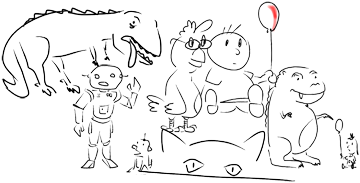
It turns out I’m easily distracted, and when I get distracted I tend to draw. Or sometimes I draw to share an idea, make a point, or communicate because words are big and scary. And I share my drawings online.

drawing_collage.png

OK, now here’s the kicker: People have been telling me they want to buy my drawings so they can wear them. On their bodies.

Sometimes, even I can take a hint, so I set up shops at Zazzle and Cafe Press. Why both, you ask? Because I haven’t decided which online store gives me the best balance between product quality and choice.

Yes, I’ll add more stuff over time, too, because I draw like I talk: I just can’t stop.

Go ahead an point your trusty Web browser on over to Zazzle or Cafe Press and wear me. Just like you’ve always wanted to.

Periodic Table of Elements, But Cooler

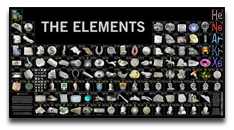
Our ability to categorize and catalog our surroundings is pretty amazing, and the periodic table of the elements is one of the best examples of how we’ve used those traits to add structure to the chaos that surrounds us. Imagine my delight when a friend gave me what I consider to be the coolest periodic table I’ve ever seen. Yes, it’s on the wall in my office so I can check it out every day.

photographic_pte.png

The PTE Charles gave me is actually a photographic table, which adds the extra coolness of being able to see the elements instead of just referencing their properties. Imagine my surprise when I discovered that elements like Rutherfordium, Meitnerium and Einsteinium actually look like real people. Amazing!

You can pick up your own photographic PTE at periodictable.com. It’s available as posters, 3D lenticular posters, place mats, and decks of playing cards.

Graphic Design: It’s Not All Puppy Dogs and Rainbows

A friend turned me onto a fantastically funny video recently that does a wonderful job of showing off the kinds of problems professional designers are faced with when their clients don’t understand what’s really involved in creating a quality print product. The video made me laugh, but it also drove home an important point: Too many people undervalue professional creative work, and too often designers just roll over and let it happen.

client_vs_designer.png

The first problem is that clients quite often have absolutely no idea what it takes to design a creative and unique product, nor do they have a clue about the knowledge and expertise required to design something that can actually be printed. A good designer will consider how the content balances, why target resolution matters, how trapping could change the layout’s overall appearance, when to use spot colors, how the stock will impact the finished piece, what kind of press the job will run on… You get the idea.

Many clients, on the other hand, think that anyone with a computer is a designer, and do-it-all-in-Word-so-I-can-tweak-everything-later-thank-you-very-much-oh-yeah-I-laid-everything-out-in-Excel-to-save-you-time-that-means-you’ll-charge-me-less-right? They probably also have a cousin/nephew/niece/out of work brother/neighbor that has some great design ideas you should hear. OK, that’s probably just a little over the top, but I’ve seen it happen. Even the Excel thing. Really.

The point is that the client really, truly, has absolutely no idea that graphic design is a profession — a career, not a job — that requires training, a specialized skill set, and talents that not everyone has. Sure, some people are just pricks that want to take advantage of you, but by and large I’d wager most clients are just in the dark.


Yes it’s funny. And full of f-bombs.

The trick is getting your clients to see the value in what you do, which is usually easier said than done. The idea of potentially upsetting a client and losing them — and their money — is pretty scary. But what I learned over the years is that a little fear is OK, because in the end you’ll weed out the clients that aren’t worth the time you invest and end up with quality clients that are easier to work with and pay what you’re worth.

It’s OK to charge what you’re worth, and to stand firm. The people that appreciate your talent and skills will stick around. The ones that only care about the lowest price will move on. At first, watching a problem client move on can be a freaky feeling, but they’re usually time vortexes that eat away at your availability for other projects, and they eat away at your profits, too.

Also, you know what you’re charging right now? Yeah, it’s probably too low. Too many quality designers charge far less than they’re worth because of that ever-nagging fear of not landing the client. Charge too little, and people will assume you aren’t as good as your competition.

Once the problem children are out of the way, you have more time to spend working with your quality clients. They’ll probably recommend you to other potential clients, and if they don’t it’s OK to ask them for referrals.

And another thing: If someone wants you to do a job on spec, walk away. A spec job is just another way of saying “I don’t value your skills enough to even consider paying you.” The line about being able to add more great design stuff to your portfolio is a load of crap, too. Designers never win with spec jobs.

If you are a designer, go hug your clients that treat you well and pay you what you’re worth. If you are a design client, go hug your designer and consider giving them a raise even if they don’t ask for one. Sometimes designers are a little shy and don’t know how to ask.

And don’t forget: Friends don’t let friends design in Word. Or Publisher. And especially not in Excel. OK, go design something, and let’s be careful out there.

Gag Me With a Logo

You know how bad it is when you see Microsoft Office clip art logos on the sides of trucks? It can get worse than that. Much worse. Really. I found the proof at YourLogoMakesMeBarf.com.

yourlogomakesmebarf.png

The Web site is a collection of some of the absolute worst logo designs ever, all on display for your morbid viewing curiosity. Clip art out of control, color disasters, and fonts gone wild — typically all in the same logo.

Jay Nelson and I spent a few minutes talking about the site on the Design Tools Weekly podcast, too. Feel free to point your Web browser over there and take a listen.

pmslogo.png
Sweet Baby Jeebus, please make it stop.

Sure, I’m poking fun at the atrocities gracing the site’s pages, but it’s also a great place to learn what not to do when designing a logo. The bottom line is if you aren’t a professional designer you probably shouldn’t create your company’s logo, and you can see exactly why by browsing through the gems highlighted at YourLogoMakesMeBarf.com.

Tech Pillows: For Your Sleepy Inner Nerd

OK, I just want to make sure everyone understands right up front that I don’t have some kind of pillow fetish just because I happen to come across cool stuff that so happens to be, well, pillow shaped. That said, how can you possibly resist something as cool as your own RSS pillow, or maybe your own Mac app pillow set?

rss_pillow.png

The brilliantly talented crew at Throwboy turned Mac application icons — along with the standard RSS badge — into sweet pillowy goodness. They recreated the Finder, iTunes, iChat, iPhoto, Photo Booth and Dashboard all in fleece so you can snuggle up with your favorite app even when your Mac isn’t on the couch with you.

But wait! There’s more! Along with the RSS pillow, they also have a series of chat bubble pillows with classic sayings like “OMG,” FML,” and my favorite, “wtf.”

Each pillow will set you back $29, or you can choose any six for $149. I’m already eyeing the RSS pillow. And maybe the Finder. OK, and “wtf,” too. Oh, man… FML.